
Will Rechargeable Hearing Aids Last Through Your Day?
Puretone Hearing Clinic editorial team
 Clinically reviewed by Aaisha Qureshey, Registered Audiologist.
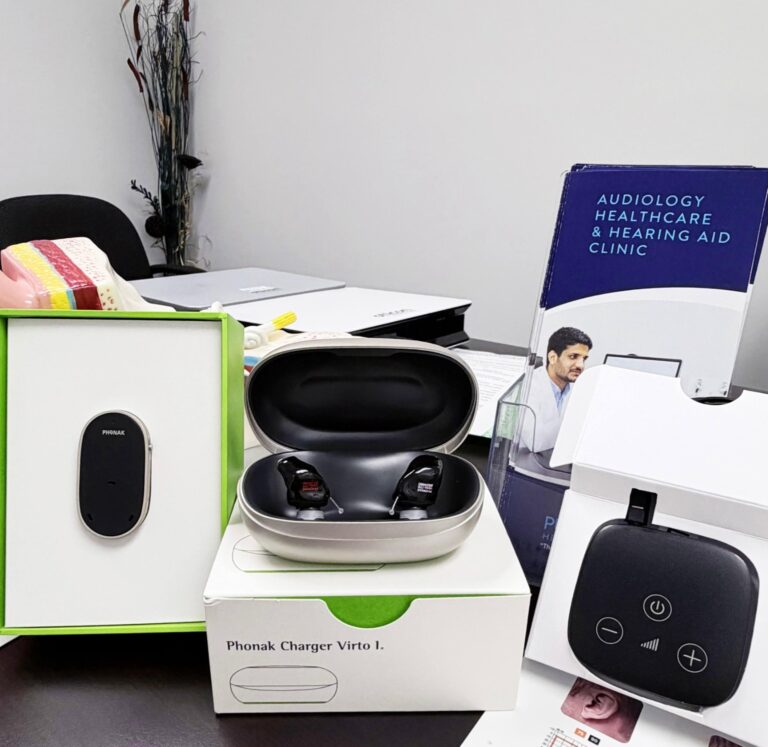
Most rechargeable hearing aids are designed to last through a normal day on one charge. To check whether they’ll suit you, think about how many hours you wear your hearing aids, from putting them in in the morning to taking them out at night. Then add how long you usually stream phone calls, TV or music. If you spend several hours a day on calls, that matters.
Why battery life varies from person to person
Manufacturers measure battery life under set test conditions, and real life is different. Several things affect how long a charge lasts:
- Streaming. Phone calls, TV and music use more power than everyday listening.
- Your hearing loss. Hearing aids set to give more amplification use more power.
- Busy places. Some speech-in-noise features use extra power while they’re working.
- Battery age. Like a phone, a hearing aid battery slowly holds less charge over the years.
So the biggest battery number in an advert tells you only part of the story. Tell us about your routine, especially long work days or lots of calls, and we’ll talk through what to expect from the model you’re considering.
Charging at home and on the go
Most people simply put their hearing aids in the charger overnight, the same way they charge a phone. A full charge usually takes a few hours.
Many manufacturers also offer a portable charging case with its own built-in battery. Some can recharge the hearing aids around three times without being plugged in, which is handy for travel or long days out. If you always charge at home, a simpler charger that plugs into the wall may be all you need.
Tips for reliable charging
- When you put the hearing aids in the charger, check that both charging lights come on as described in your user guide.
- Keep the charger’s contacts clean and dry.
- Chargers aren’t interchangeable, even within the same brand. The Phonak charger compatibility guide shows why the exact model matters.
- Before you travel, pack the right charger and power supply.
- Never open a hearing aid’s built-in battery or use a charger that isn’t approved for it.
When the battery doesn’t last as long as it used to
Rechargeable batteries gradually lose capacity with age. If your hearing aids used to last into the evening but now need charging more often, that doesn’t necessarily mean you need new hearing aids. We can check whether it’s normal battery wear, a fault, a charging problem or extra power use from a setting.
If only one hearing aid runs down early, keep a simple note for a day: when you put them in, how much you streamed and when the problem started. Bring both hearing aids and the charger to your appointment. This helps us track down problems that come and go. Also ask how the battery is serviced and what the warranty covers for your hearing aids. That’s just as important over the years as how long a new battery lasts.
Is rechargeable right for you?
Rechargeable hearing aids suit many people, especially if small batteries are fiddly to handle. If you often travel without access to power, or need a very small custom hearing aid, disposable batteries may still make sense. Rechargeable options now include custom in-ear styles such as Phonak Virto R Infinio and Oticon Zeal.
Read about rechargeable hearing aid options or compare custom rechargeable and behind-the-ear designs. If charging is a problem, a service check may help. Ask Puretone about a charging problem or new fitting.
Sources Phonak Canada – batteries and chargers, StarkeyPro Canada – charging options and the user guide for the exact equipment.