
Types of Hearing Aids, Explained by Registered Audiologists
Most people do not start by knowing which hearing aid they need. They start with simpler questions: will it be visible, will it be easy to use, and will it help in the places where hearing feels hardest?
Your Audiologist helps you compare styles and features after assessing your hearing. The options below explain how different designs fit and what to ask about comfort, charging and connections.
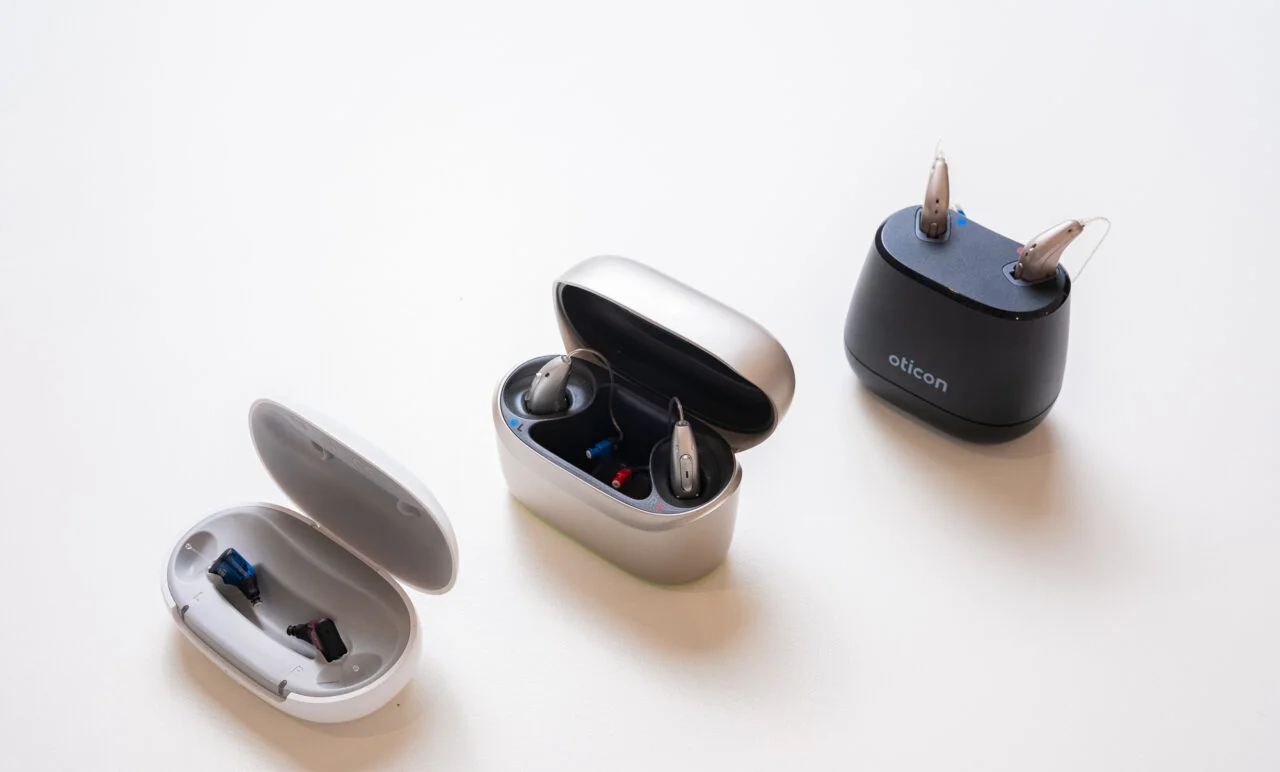
The Main Types of Hearing Aids
Compare where each style sits, who it may suit and what to consider. Your hearing test, ear shape and handling needs help narrow the options.
A smaller hearing aid may be less visible, but it can have smaller controls or fewer features. Ask to see suitable designs and try the controls before deciding.
Receiver-in-Canal Hearing Aids
Where it sits: A small case behind the ear connects by a thin wire to a speaker in the ear canal.
May suit: A range of hearing losses, depending on the speaker and earpiece.
Consider: Rechargeable and Bluetooth options are widely available, though features vary. A thin wire is visible.
Behind-the-Ear Hearing Aids
Where it sits: A case behind the ear connects through tubing to an earpiece or earmould.
May suit: A wide range of hearing losses, including severe to profound loss with suitable models.
Consider: Size, controls and available power vary. Larger controls may be easier to handle. Tubing needs maintenance.
Custom Hearing Aids
Where it sits: A custom shell fits the outer ear or ear canal, often called in-the-ear (ITE) or in-the-canal (ITC).
May suit: People who prefer an in-ear design, where hearing levels, ear shape, comfort and handling needs allow.
Consider: Power, charging and connectivity vary. Earwax and moisture need attention.
Small In-Canal and Invisible Hearing Aids
Where it sits: A small hearing aid sits inside the ear canal. These styles include completely-in-canal (CIC) and invisible-in-canal (IIC) designs.
May suit: Suitable hearing losses and ear canals where a small, less noticeable design is practical.
Consider: Small parts can be harder to handle. Available power, controls and wireless features may be limited.
Small, Discreet Hearing Aids. Smart AI Technology.
Want hearing aids that draw less attention? Ask about Oticon Zeal™, a small, nearly invisible in-ear option combining AI sound processing, rechargeable power and Bluetooth connectivity for calls and streaming with compatible phones.
Explore the latest discreet hearing-aid technology with a Registered Audiologist. We’ll check your hearing, ear fit and phone compatibility to see whether Zeal suits you.
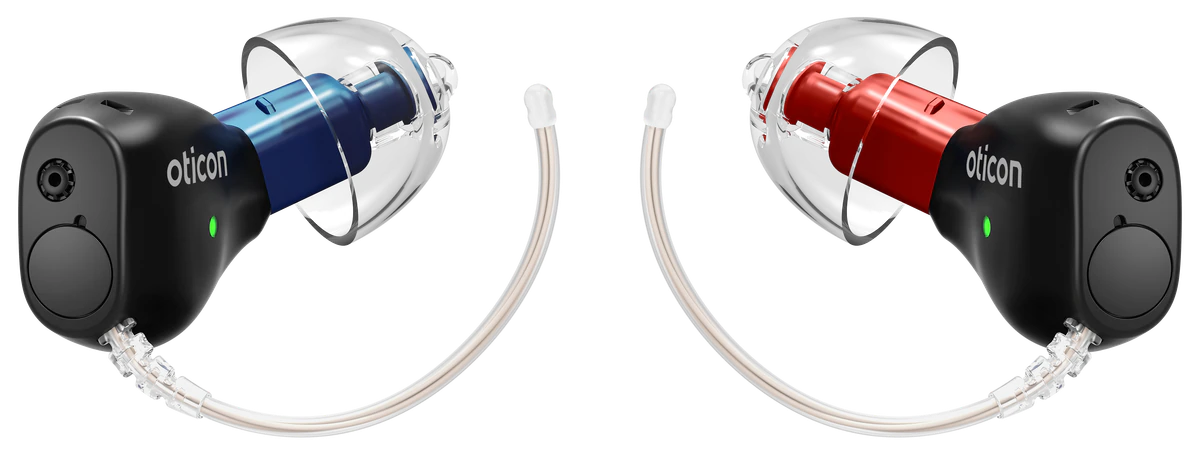
Hearing Aid Features Explained
Rechargeable Hearing Aids
Bluetooth Hearing Aids
Background Noise Support
Smart and AI Features
Built-In Tinnitus Support
Telecoil and Auracast
A telecoil can receive sound from a hearing loop in a venue that has one. Not every hearing aid includes a telecoil. Some newer models support Auracast broadcast audio, which lets compatible equipment send audio to compatible hearing aids. Check the exact model, software, phone or accessory requirements and the venue’s system before relying on either feature.
If You Hear Well in Only One Ear
If one ear has little usable hearing, a standard hearing aid on that side may not provide useful benefit. A CROS system sends sound from the poorer side to the better-hearing ear. BiCROS also amplifies sound for the better ear when it has hearing loss. These systems do not restore normal hearing in both ears. Your Audiologist can explain suitable options after assessment.
Fit, Comfort and Care
Domes, Earmoulds and How Your Own Voice Sounds
The earpiece affects sound as well as comfort. An open dome lets more natural sound into the ear and can reduce a blocked feeling when you speak. A more closed dome or custom earmould can help retain amplification, but your voice may initially sound boomy. This is called the occlusion effect. Tell your Audiologist if it is uncomfortable so the fit and settings can be reviewed.
Checking the Fit
Where suitable, your Audiologist uses Real-Ear Measurement to check the sound your hearing aids deliver in your ear canal. The measurements are compared with targets based on your hearing test, and the settings are adjusted where needed.
Looking After Your Hearing Aids
Water resistance is not the same as waterproofing. Follow your model’s care instructions for cleaning, drying and charging. Check domes and wax guards regularly and replace them when needed rather than following one fixed schedule for every device. For hearing aids purchased from Puretone, in-clinic care, domes and receivers are included while the devices remain in working condition. Ask about other supplies and any manufacturer repair or custom earmould charges.
Hearing Aid Brands and Financial Accessibility
Compare Hearing Aid Brands
Understand Costs and Coverage
0% financing is available for eligible patients. Terms and conditions apply. Please speak with our team about options and eligibility.
Already Wearing Hearing Aids or Helping a Loved One?
Some patients come here choosing a first hearing-aid style. Others are trying to understand why current hearing aids are not working well enough.
Review Your Current Hearing Aids
If your hearing aids are not helping enough, bring them and describe where you struggle. Your hearing may have changed, or the devices may need adjustment, servicing or repair.
Your Audiologist can review the fit, settings and available support before discussing whether replacement would help.
Support a Loved One
Family members are welcome at the appointment. They often notice where you struggle most and can help weigh comfort, handling and appearance.
Frequently Asked Questions About Types of Hearing Aids
Style describes the shape of the hearing aid and where it sits. Features include charging and phone connections, as well as the sound processing used to manage different listening settings.
Not always. Smaller hearing aids can be more discreet, but they are not automatically better for every hearing profile. Some patients hear better and find daily use easier with a style that is slightly larger.
They can be useful if changing small batteries is difficult. You still need to charge them regularly. Your Audiologist can check whether the hearing aids and charger suit you.
Compatibility depends on the hearing aids and your phone. Bring your phone or its model details so we can check. Television streaming may need a separate accessory.
The terms usually describe hearing aids that adjust settings automatically as sounds change, sometimes using AI-based processing. Ask your Audiologist what a specific feature does, how it may help where you struggle and what its limits are.
Yes. The best style and technology recommendation should begin with a detailed hearing test so the final choice fits your hearing levels, daily needs, and hearing aid fitting requirements.
Yes. If a certain style or brand stands out to you, bring it up. Your Audiologist can explain whether it is likely to be a strong fit for your hearing and lifestyle.
Both matter. A suitable hearing aid style still needs a careful fitting. Your Audiologist checks the sound delivered in your ear and adjusts the settings against targets based on your hearing test.
No. Suitability depends on your hearing, ear shape, handling needs and the features required. Your Audiologist can compare a small in-canal design with other suitable styles.
Style affects where the microphones sit. Your Audiologist considers style, available features, your hearing and the places where you need to hear well, then checks the fitting.
Suitable behind-the-ear models and some receiver-in-canal models can provide the power needed for severe hearing loss. Very small in-canal designs may not. Your Audiologist considers your hearing test, ear shape and handling needs before recommending a style.
Many people do. Bring your glasses and, if used, your mask to the fitting so the space around your ears and the fit can be checked. An in-ear style may be another option when it suits your hearing.
Talk to an Audiologist About Your Options
Book a hearing test at our clinics in Surrey, White Rock and Vancouver. Bring your questions, your current hearing aids if you have them, and a family member if you would like.
Our team will discuss your request and confirm the appointment details.