Puretone Hearing Clinic — Registered Audiologists in Surrey and Vancouver

Real-Ear Measurement for More Accurate Hearing Aid Fittings

Your hearing aids are switched on, but voices sound too soft, sharp or uneven. A fitting check can help us understand what needs attention.
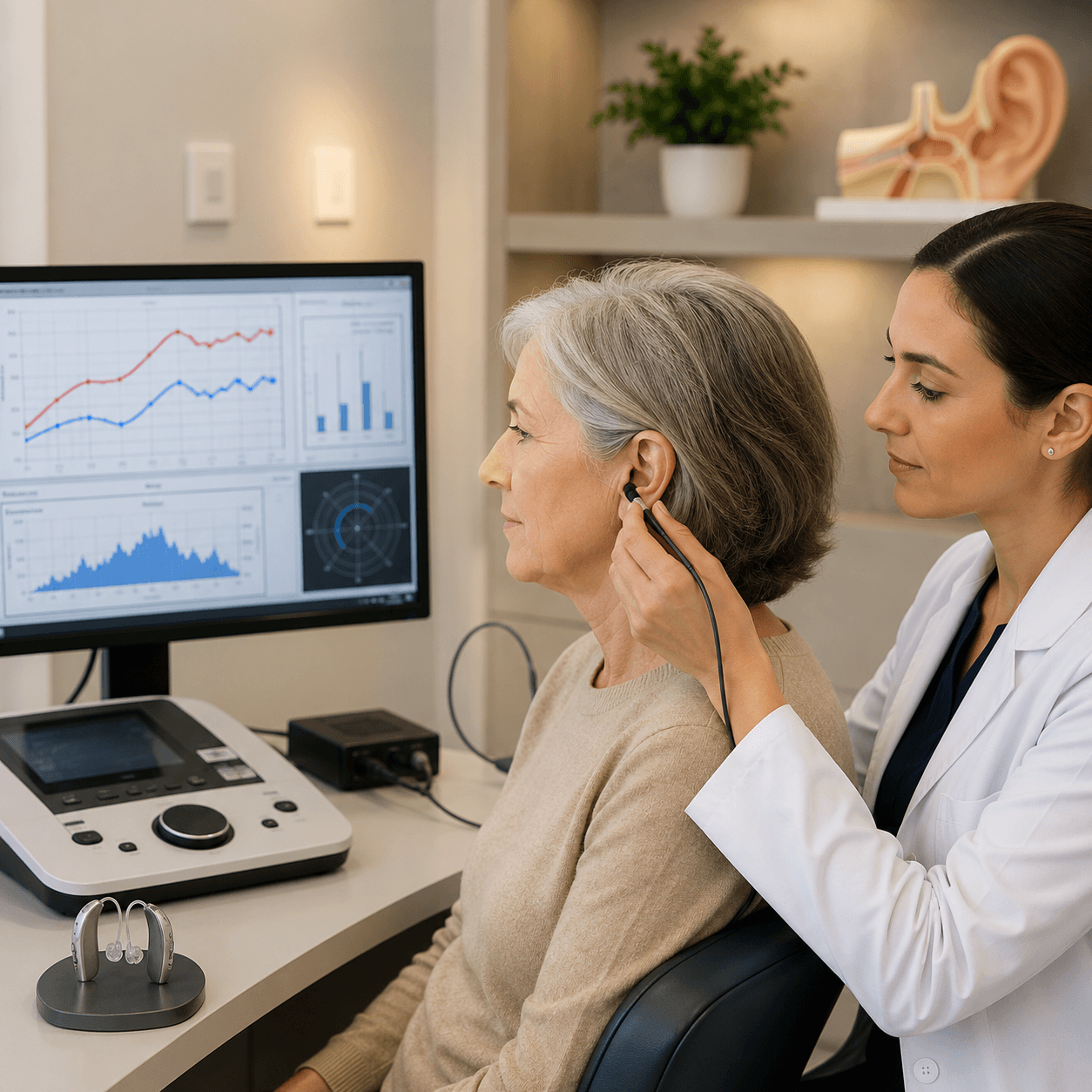
Real-Ear Measurement (REM) checks the sound your hearing aids deliver in your ear canal. Your Audiologist compares the measurements with targets based on your hearing test and adjusts the settings where needed.
The measurements are considered alongside your hearing, the physical fit and what you notice in everyday listening. REM doesn’t explain every listening difficulty or guarantee clear speech in every situation.
Our Registered Audiologists perform Real-Ear Measurement (REM) for most patients receiving new hearing aids. We usually complete it during the initial fitting or a follow-up appointment. In some cases, ear canal anatomy or other clinical limitations may prevent the measurement. REM may also be useful when reviewing hearing aids you already own.
  • Registered Audiologists
  • Measurement-Based Fitting
  • Surrey
  • White Rock
  • Vancouver

Why Real-Ear Measurement Matters

A hearing aid fitting based only on software is still a prediction. REM shows what is actually happening in the ear.
The size and shape of your ear canal affect the sound that reaches your eardrum. Measuring it helps us check whether the settings need adjustment.
Illustration of a clinician checking a patient's ear beside hearing-aid measurement equipment

What Happens During the REM Process?

Your Audiologist explains each step. Tell us if the tube or test sounds feel uncomfortable.
01

A Small Measurement Tube

A thin, soft tube is placed in your ear canal alongside the hearing aid. Tell your Audiologist if it feels uncomfortable.
02

Speech-Level Measurement

A speech signal is played while the hearing aid is in place. The tube measures what the hearing aid is actually delivering inside the ear.
03

Comparison to Your Targets

Your Audiologist compares the measured result to the speech targets based on your hearing test.
04

Adjusting the Settings

If the hearing aid is too weak, too strong, or unbalanced in certain areas, we adjust the settings while measuring the result.

Estimated Fit vs Measured Fit

Estimated Fit

The hearing aid is programmed using software based on your hearing test and a general model of the ear.
What the Software Provides:
  • Uses your hearing test to calculate initial settings.
  • Provides a starting point based on a model of the ear.
  • Doesn’t directly measure the sound in your own ear canal.

Measured Fit

The hearing aid is checked inside your actual ear canal using REM.
What Measurement Adds:
  • Measures the sound delivered in your ear canal.
  • Compares the output with fitting targets.
  • Guides adjustments alongside your feedback.
We use the measurements and your feedback together when adjusting the fitting. Our guide to how Real-Ear Measurement works walks you through the steps.

What REM Can and Can’t Tell You

REM shows how the amplified sound in your ear compares with fitting targets. This helps guide changes to soft, conversational and louder sound levels.
The aim is to make useful speech sounds audible while keeping louder sounds comfortable. Your experience still matters: tell us what sounds clear, harsh or tiring after the adjustment.
REM doesn’t remove all background noise or measure success in every real-life conversation. Your hearing, hearing-aid features, physical fit and listening environment also affect what you hear.
Smart features and background-noise processing still need a suitable fitting. We consider these features alongside the measurements and the listening situations that matter to you.
  • Which voices or sounds are hardest to hear.
  • Whether sound feels too sharp, soft or uncomfortable.
  • How the hearing aids work in the places you use them.

Before Replacing Hearing Aids, Check the Fit

If you’re considering replacing your hearing aids, a review can show whether adjustment, repair or different devices make sense. In-ear measurements, where appropriate, help us assess the settings as part of that review. What can be adjusted depends on the brand, model, condition, software and manufacturer support. We explain the options and any service fees before proceeding.

Fees and Financial Accessibility

Ask our team to confirm the applicable fees before booking, including any separate charges for assessment, adjustments or follow-up.
For new hearing aids fitted at Puretone, REM is part of the fitting process.
We can assess and adjust supported hearing aids bought elsewhere. A professional evaluation fee may apply, and a reprogramming fee applies if we reprogram them. We can discuss the services and fees when you call or come in, before proceeding.
If new hearing aids are recommended, we can explain extended health benefits and relevant funding options, including WorkSafeBC or Veterans Affairs Canada where applicable. 0% financing for eligible patients. Terms and conditions apply. Please speak with our team to discuss financing options and eligibility.

Frequently Asked Questions About Real-Ear Measurement

The tube is thin and soft, and the measurement is usually comfortable. Tell your Audiologist right away if the tube or sounds cause discomfort.

For new hearing aids fitted at Puretone, REM is part of the fitting process. A professional evaluation fee may apply when reviewing hearing aids purchased elsewhere. Ask our team to confirm the applicable fees before booking.

REM may be useful when reviewing hearing aids you already own. Your Audiologist checks whether measurement and adjustment are appropriate. Available adjustments depend on the brand, model, condition, software access and manufacturer support.

The time needed depends on the checks and adjustments your hearing aids require. Ask our team to confirm the expected appointment length when booking.

No. REM helps us check the sound delivered in your ears and adjust the fitting. It doesn’t remove all background noise or guarantee clear speech in restaurants. Your hearing, the devices and the listening environment also matter.

Yes. Ear canals are shaped differently, so sound behaves differently from one person to another.

It may help us check whether the sound delivered in your ears matches the fitting targets. Your Audiologist considers this alongside your hearing, device checks, physical fit and the difficulties you describe.

Practice can vary. Ask how your hearing-aid fitting will be checked and whether in-ear measurements are included. At Puretone, REM is part of our new hearing-aid fitting process.

A higher technology level doesn’t tell us how much sound reaches your eardrum. REM checks the output in your ear and helps guide adjustments, alongside your comfort and listening needs.

Arrange a Hearing Aid Fitting Review

Bring your current hearing aids and tell us what you’d like to hear more easily. Our team can help arrange the appropriate appointment.
If you’re considering hearing aids for the first time, a hearing assessment is the starting point. We explain suitable options and how the fitting is checked.
Our team will confirm the appointment details and applicable fees with you.

Surrey — Scott Road

On 120 Street, close to North Delta and Strawberry Hill.

Surrey — King George Boulevard

On King George Boulevard in Newton, serving central Surrey.

White Rock / South Surrey

On 16 Avenue in South Surrey.

Vancouver — Main Street

On Main Street in Mount Pleasant.