
Custom Rechargeable or Behind-the-Ear Hearing Aids: Which Fit Is Easier?
Puretone Hearing Clinic editorial team
 Clinically reviewed by Aaisha Qureshey, Registered Audiologist.
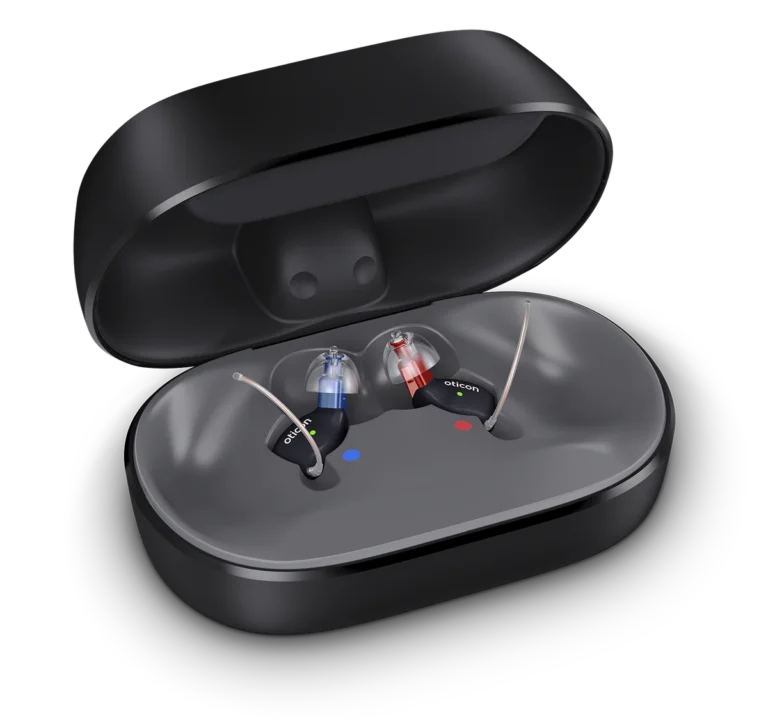
The best rechargeable hearing aid is the one you can put in, take out and wear comfortably every day. Here are the main styles in plain terms:
- Custom in-ear: made from an impression of your ear, so the whole hearing aid sits in the ear.
- Receiver-in-canal (RIC): a small case sits behind the ear, connected by a thin wire to a tiny speaker in your ear canal. It’s a very common style today.
- Behind-the-ear (BTE): a slightly larger case behind the ear sends sound through a tube to an earmould. It often suits people who need more power.
A hearing assessment helps narrow the choice based on your hearing, the shape of your ear and how easily you can use your fingers.
More choice than ever
Until recently, most rechargeable hearing aids sat behind the ear. Now there are rechargeable custom options too, such as Phonak Virto R Infinio and Starkey Signature Series, along with ready-made in-ear styles such as Oticon Zeal. Behind-the-ear and receiver-in-canal hearing aids still offer the widest range of power and features.
Why the fit inside your ear matters more than the shape
A custom shell, a soft dome and an earmould each change how sound behaves in your ear. If you need a lot of amplification, sound can leak out around a loose earpiece and cause whistling, so a closer fit helps. On the other hand, if your own voice sounds boomy or “plugged”, a vent or a more open style may feel better. The right choice depends on how much hearing loss you have, its pattern, the shape of your ear and how comfortable you are with loud sounds.
That’s why a small custom hearing aid can be right for one person and wrong for someone else who likes the look just as much. Your Audiologist should explain how the chosen style meets your hearing needs, not just how discreet it is.
Cleaning and repairs
With a receiver-in-canal hearing aid, we can often swap a dome, receiver or earmould at your appointment. A custom shell may need to be adjusted or sent to the manufacturer if its shape needs changing. Ask how cleaning, adjustments and repairs are handled for the models you’re considering.
If you spend a lot of time outdoors or wear a headset, a helmet or ear protection, tell us. It can affect which style is most comfortable and practical for you.
Which style suits your routine?
- If you wear glasses all day, the space behind your ear may matter. Try both styles with your glasses on.
- If your fingers are stiff or shaky, a slightly larger hearing aid, easy controls and a simple charger may matter more than size.
- If you use your phone a lot, check which models stream calls. Some of the smallest custom styles don’t.
- If you’ve worn hearing aids before, tell us what you found awkward about your last pair.
The right hearing aid is one you can wear comfortably, look after and use every day, while still giving you the amplification you need. Our article on rechargeable battery life and charging covers the charging side.
Explore hearing aid styles and rechargeable hearing aids. Ask to handle two styles at your visit.
Sources NIDCD – hearing aid styles and fitting and ASHA – hearing aid selection and verification.